Managing real estate leads across calls, messages, and spreadsheets is one of the fastest ways to lose potential buyers and deals. Real estate CRM software is a digital system that helps realtors store contacts, track inquiries, manage properties, and monitor every stage of the sales process from one dashboard. Instead of relying on manual follow-ups and scattered data, a CRM keeps all client and property information organized and accessible.
CRM tools are becoming essential for realtors because today’s buyers and sellers expect faster responses, clear communication, and professional service. With increasing competition, real estate CRM software in Nepal helps agents manage leads efficiently, nurture client relationships, track properties, automate follow-ups, and close deals faster with less effort.
What Is Real Estate CRM Software?
Real estate CRM software is a specialized tool designed to help realtors manage leads, clients, properties, and sales activities in one centralized system. Unlike manual tracking or basic contact tools, it focuses specifically on real estate workflows such as property inquiries, site visits, negotiations, and deal closures.
Real estate CRM software differs from general CRM tools because it is built around property-based transactions rather than generic sales pipelines. While standard CRMs manage contacts and deals, real estate CRMs include features like property listing management, buyer–seller matching, follow-up reminders, and inquiry tracking tailored to real estate operations.
In modern real estate businesses, CRM software plays a critical role in improving productivity and consistency. It helps agents respond faster to leads, maintain detailed client histories, track ongoing deals, and automate routine tasks, allowing realtors to focus more on building relationships and closing sales.
Why Realtors in Nepal Need CRM Software: Top Reasons
Realtors need CRM software to manage leads, maintain client relationships, and close deals consistently without missing follow-ups or wasting time. As real estate transactions become faster and more competitive, relying on manual tracking makes it difficult to respond quickly, stay organized, and scale operations. A real estate CRM benefits businesses by bringing structure, automation, and visibility to everyday sales activities.
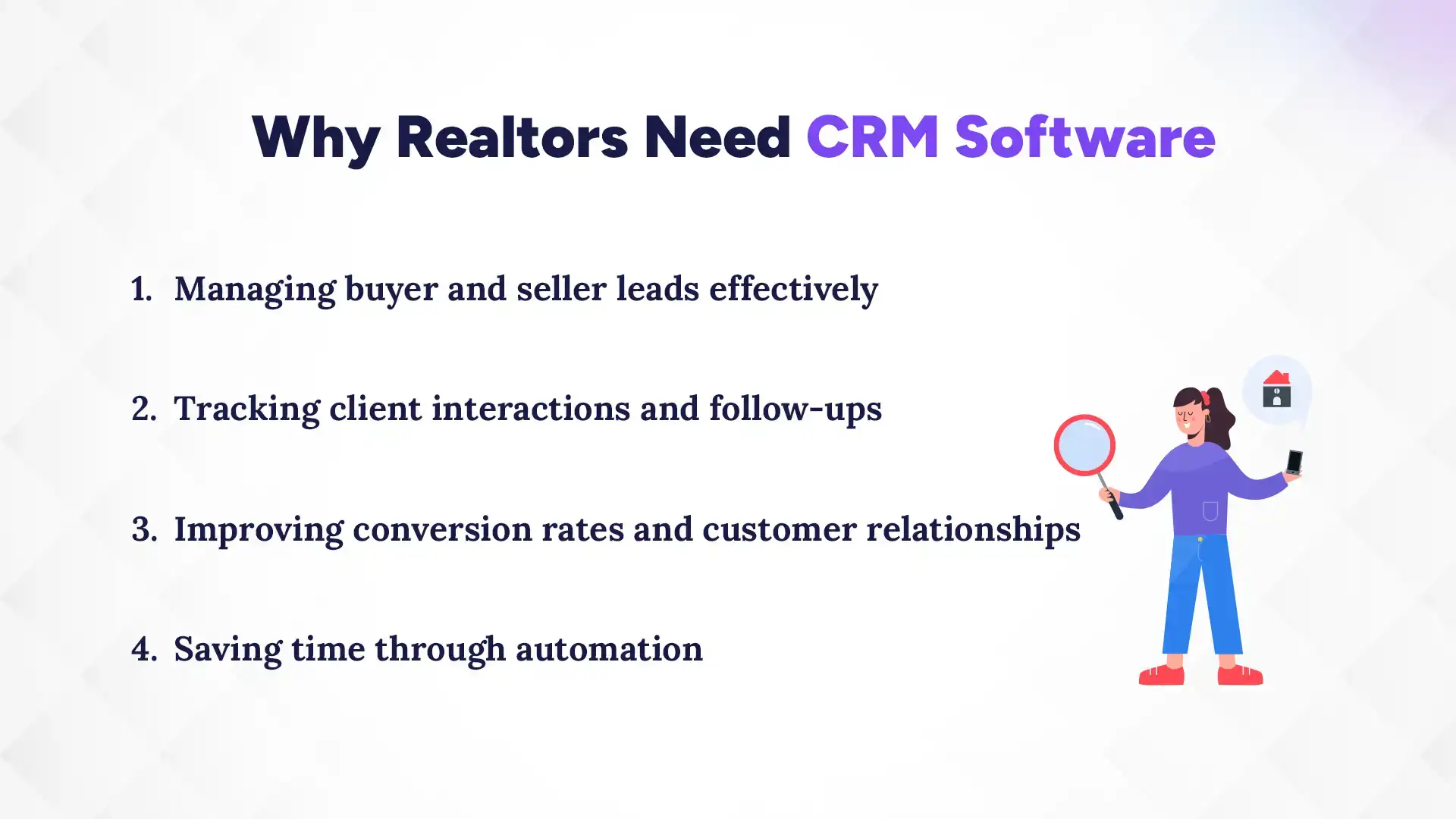
1. Managing Buyer and Seller Leads Effectively
A real estate CRM helps realtors capture, organize, and prioritize buyer and seller leads in one place. Instead of juggling phone logs, emails, and WhatsApp messages, every inquiry is automatically stored with source, interest, and status. This makes it easier to identify hot leads, segment buyers and sellers, and respond at the right time. Realtors can also track where leads come from, such as property portals or websites, to focus on channels that convert best. Over time, this structured lead management reduces missed opportunities and improves deal flow.
2. Tracking Client Interactions and Follow-Ups
CRM software records every interaction with a client, including calls, messages, emails, and site visits. This allows realtors to understand client preferences, past discussions, and current deal status instantly. Automated reminders ensure no follow-up is forgotten, even when managing dozens of clients at once. Consistent follow-ups build trust and show professionalism, which is critical in real estate transactions. By having a complete interaction history, realtors can communicate more confidently and close deals faster.
Insights
Did You Know?
Around 90% of home buyers start their property search online, making digital presence and CRM systems essential for managing leads effectively.
3. Improving Conversion Rates and Customer Relationships
A real estate CRM improves conversion rates by helping agents respond faster and more personally to leads. When client data, property interests, and timelines are clearly visible, realtors can tailor their communication instead of sending generic responses. This personalized approach strengthens customer relationships and increases the likelihood of conversions. CRM analytics also help identify where leads drop off in the sales process. With these insights, realtors can refine their strategy and improve overall performance.
4. Saving Time Through Automation
CRM software saves time by automating repetitive tasks such as follow-up reminders, lead assignment, and basic communication. Instead of manually updating spreadsheets or setting reminders, realtors can focus on property showings and negotiations. Automation reduces human error and ensures consistent communication with clients. It also helps teams collaborate better by sharing updated information in real time. As a result, realtors can handle more clients efficiently without increasing workload.
Ready to Manage Leads Better?
Use Pace CRM to track leads, automate follow-ups, and close deals faster. Simple, powerful, and built for your growth.
Key Features to Look for in Real Estate CRM Software
The best real estate CRM tools include features that help you organize leads, interact with clients, manage properties, and measure performance without switching between multiple apps. Choosing the right features ensures your CRM becomes a central hub for sales, communication, and data not just another software you rarely use.
1. Lead Management and Tracking
An effective CRM should capture, organize, and track leads from all sources, such as websites, property portals, social media, and referrals. It should let you tag, score, and prioritize leads based on interest level and readiness to buy or sell. This helps you focus on high-potential prospects and avoid letting any inquiry slip through the cracks. Tracking also shows which channels generate the most leads, so you can invest in what works best.
2. Contact and Client Database
A central database is essential for storing all contact details, preferences, communication history, and property interests. This feature lets you quickly retrieve client information whenever needed, preventing duplicated data or lost conversations. It also enables segmentation. For example, separating buyers from sellers or filtering clients by budget, making communication more targeted and relevant.
3. Property Listing Management
Real estate CRM software should allow you to add, categorize, and update property listings with key details like price, location, photos, and status. The CRM should link listings to specific leads or clients so you can easily show relevant properties and track interest levels. This feature eliminates the need for separate spreadsheets or tools to manage listings.
4. Task Reminders and Follow-Ups
Automated reminders and follow-up scheduling ensure you never miss an important call, email, or site visit. The CRM should let you create tasks and alerts tied to specific leads or deals so every next step is clear. This boosts accountability and timely communication, which leads to stronger client relationships and higher conversions.
5. Email and SMS Integration
Built-in email and SMS features help you communicate with clients directly from the CRM. You should be able to send, receive, and track messages without switching apps. Templates and bulk messaging also save time, especially for drip campaigns or sending property updates to multiple clients at once.
6. Reporting and Analytics
Reporting tools provide insights into your sales performance, lead sources, conversion rates, and team productivity. The CRM should offer dashboards and customizable reports so you can evaluate what’s working and what needs improvement. With analytics, you can forecast trends, set targets, and make data-driven decisions.
7. Mobile-Friendly Access
Since realtors are often on the move, a mobile-friendly CRM or dedicated app is crucial. It ensures you can access client information, respond to leads, update listings, and track tasks from your phone or tablet. Mobile access keeps your business responsive and fully managed even when you’re away from the office.
Which Is the Best Real Estate CRM Software in Nepal?
Pace CRM is one of the best real estate CRM solutions for Nepali realtors because it combines essential lead management, client tracking, and task automation in an affordable, easy-to-use package. Nepal’s real estate market is expanding, with more buyers and sellers expecting prompt responses and organized communication. Many agents still rely on manual tracking or spreadsheets, which leads to missed follow-ups, lost opportunities, and slower sales cycles problems a dedicated CRM can solve.
Pace CRM helps real estate professionals in Nepal capture and organize leads from multiple sources, maintain a clean client and property database, schedule reminders and follow-ups, and track the progress of deals from inquiry to closing. Its simplicity, clear pricing, and focus on the core needs of realtors make it a strong choice for small and mid-sized agencies looking to improve productivity and close more sales.
How to Choose the Right Real Estate CRM for Your Business?
Choosing the right real estate CRM starts with matching the tool to your business size, budget, and growth plans so you get maximum value without paying for features you don’t need. The right CRM should support your sales process, fit your team’s workflow, and grow with your business without creating complexity or hidden costs.
1. Budget and Pricing Considerations
Before selecting a CRM, decide how much you are willing to spend monthly or annually. Some CRMs offer free plans with basic lead and contact management, while others charge for advanced features like automation, reporting, and integrations. Consider whether you need only core CRM functions now or if you’ll want premium capabilities later. Also check for setup fees, user limits, and extra costs for SMS/email credits or add-ons.
2. Team Size and Scalability
Your CRM should fit your current team size and be able to scale as your business grows. A tool that works for a solo agent may not be ideal for a larger agency with multiple agents and managers. Look for CRMs that make it easy to add users, set roles and permissions, and support team collaboration without significant price increases.
3. Customization Needs
Every real estate business has unique processes, fields, and data points it tracks. Choose a CRM that lets you customize pipelines, fields, tags, and property categories so it reflects how your business actually works. Customization keeps the CRM relevant to your workflows instead of forcing you to change how you operate.
4. Integration with Websites and Portals
Your CRM should integrate with your website lead forms, property portals, email marketing tools, and communication channels like SMS or WhatsApp. Seamless integration ensures that leads from various sources flow automatically into your CRM without manual entry, saving time and reducing errors.
5. Customer Support and Training Availability
Good support and training resources are critical, especially if your team is new to CRM tools. Look for providers that offer helpful onboarding, video tutorials, live chat or phone support, and responsive troubleshooting. Strong support reduces the learning curve and helps your team get productive quickly.
Tips for Successfully Using Real Estate CRM Software in Nepal
Real estate CRM software delivers results only when it is used consistently, correctly, and aligned with your daily sales workflow. Simply installing a CRM is not enough, realtors must follow best practices to ensure accurate data, better follow-ups, and long-term business growth.
Start with proper onboarding and basic training so every team member understands how to use the CRM correctly from day one. Keep your data clean by regularly updating contact details, lead status, and property information, as outdated data reduces CRM effectiveness. Use automation wisely for reminders, follow-ups, and routine communication, but avoid over-automation that feels impersonal to clients. Monitor performance through reports and dashboards to track lead conversions, response times, and sales progress. As your real estate business grows, gradually scale CRM usage by adding users, advanced features, and integrations without disrupting existing workflows.
Conclusion
Real estate CRM software is crucial for realtors because it helps manage leads, organize client data, automate follow-ups, and close deals more efficiently in a competitive market. Choosing the right CRM is especially important in Nepal, where affordability, ease of use, and local business needs play a key role in long-term success. By adopting a suitable real estate CRM, realtors can improve productivity, build stronger client relationships, and achieve consistent sales growth.
If you want to manage leads, clients, and property deals more efficiently, adopting a reliable real estate CRM is the right next step. Tools like Pace CRM can help Nepali realtors stay organized, respond faster, and close more deals without adding complexity. Explore the top CRM solutions in Nepal and start building a more productive and scalable real estate business today.
FAQs
What is real estate CRM software?
+
Real estate CRM software helps realtors manage leads, clients, properties, and sales activities from one centralized system.
Is CRM software necessary for small real estate agencies?
+
Yes, CRM software helps small agencies stay organized, manage follow-ups, and compete effectively without increasing workload.
Which real estate CRM is best for beginners in Nepal?
+
Pace CRM is suitable for beginners in Nepal because it is easy to use, affordable, and focused on core real estate needs.
Can real estate CRM help increase property sales?
+
Yes, better lead tracking, timely follow-ups, and organized communication directly improve conversion rates and sales.
Is cloud-based CRM safe for real estate data?
+
How much does real estate CRM software cost in Nepal?
Can CRM software be used on mobile phones?
+
Yes, most real estate CRMs are mobile-friendly or provide apps for accessing data on the go.
What features should Nepali realtors prioritize in a CRM?
+
Lead management, contact tracking, task reminders, mobile access, and affordability should be top priorities.
How long does it take to implement a real estate CRM system?
+
Basic setup usually takes a few hours to a few days, depending on data entry and team training.
Ready to get started?
Book a 30-minute consultation call, and let's talk about your goals.